
Guide · Machinery export packing
Pack It Right Once,
Ship It Safely Everywhere.
Quick answerTo pack industrial machinery for export: collect the machine's weight, dimensions and centre of gravity; choose the packaging type; prepare and protect the machine; bolt it to a load-rated skid; seal it in VCI or vacuum barrier foil with desiccant; build an ISPM-15 compliant crate; mark CG and sling points; then load and lash it in the container to a securing plan.
Machinery damaged in transit usually fails in one of three ways: it moves inside its packaging, it corrodes from condensation, or it is lifted or stacked incorrectly. Each step below is designed to remove one of those risks.
Step by step
10 Steps to Pack Industrial Machinery for Export
Step 1: Collect Machine Data
Record dimensions, gross weight, centre of gravity, lifting points, fragile components and the manufacturer's transport instructions. Note the destination, transport mode (FCL, LCL, flat rack, break-bulk or air) and expected storage time.
Step 2: Choose the Packaging Concept
Select between a closed ISPM-15 wooden crate, an open framed crate, a steel skid with barrier foil, Tri-Wall corrugated or shrink wrap on a skid, based on weight, fragility, route and destination rules.
Step 3: Prepare the Machine
Drain fluids where required, remove and tag loose parts and accessories, lock moving assemblies with transport brackets, and protect bright or machined surfaces with a rust-preventive coating.
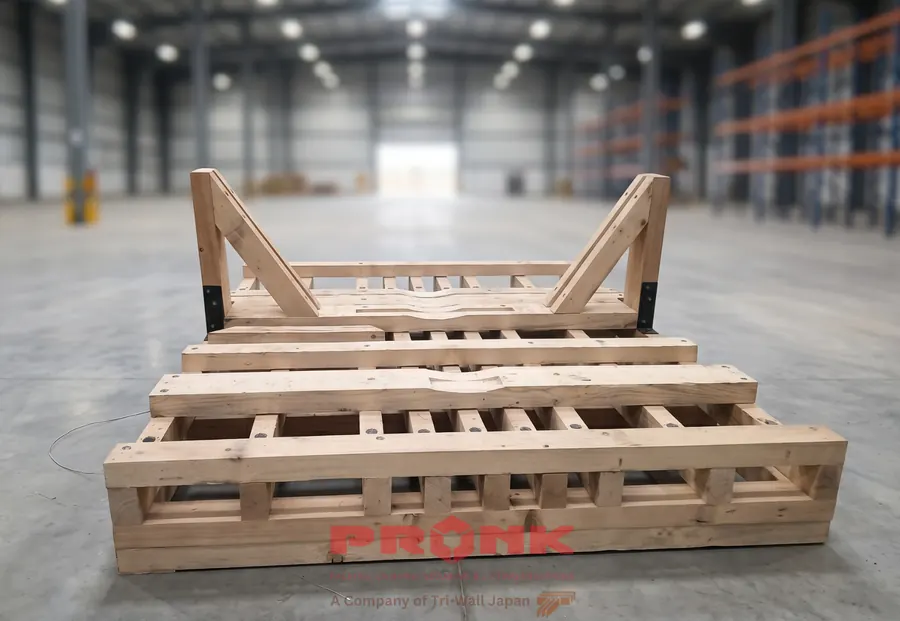
Step 4: Build the Skid or Base
Make a load-rated base from heavy-section timber or fabricated steel, with runners for forklift entry and space for sling handling. Size the members to the machine's weight and footprint.
Step 5: Mount and Fix the Machine
Lift the machine onto the base and bolt it through its own foundation holes. Never rely on friction alone. Add blocking and bracing at the designed load points so the machine cannot slide, rotate or tip.
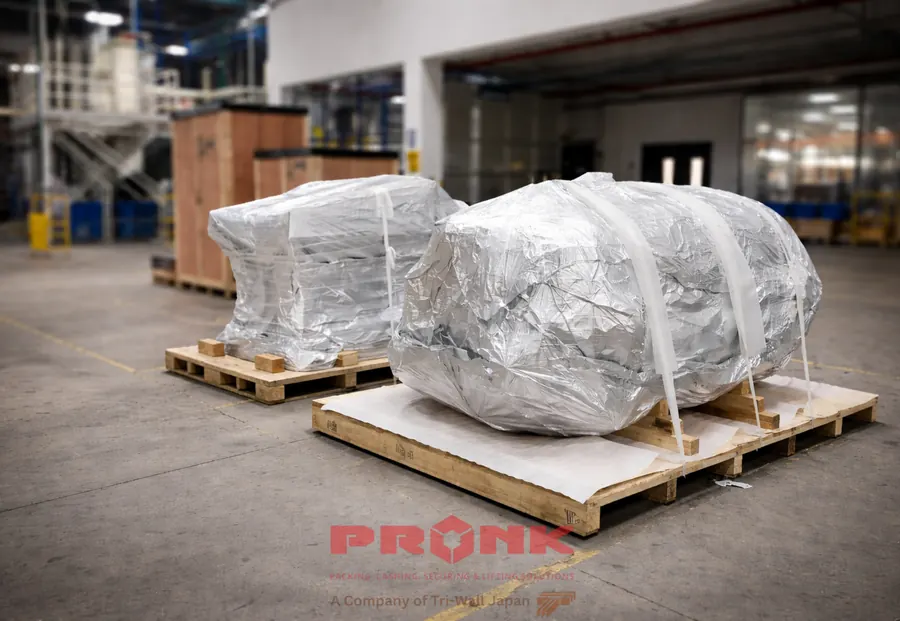
Step 6: Apply Corrosion Protection
Wrap the machine in VCI film, or seal it in aluminium-laminate barrier foil, add desiccant sized to the sealed volume and voyage, include a humidity indicator, and vacuum and heat-seal the foil.
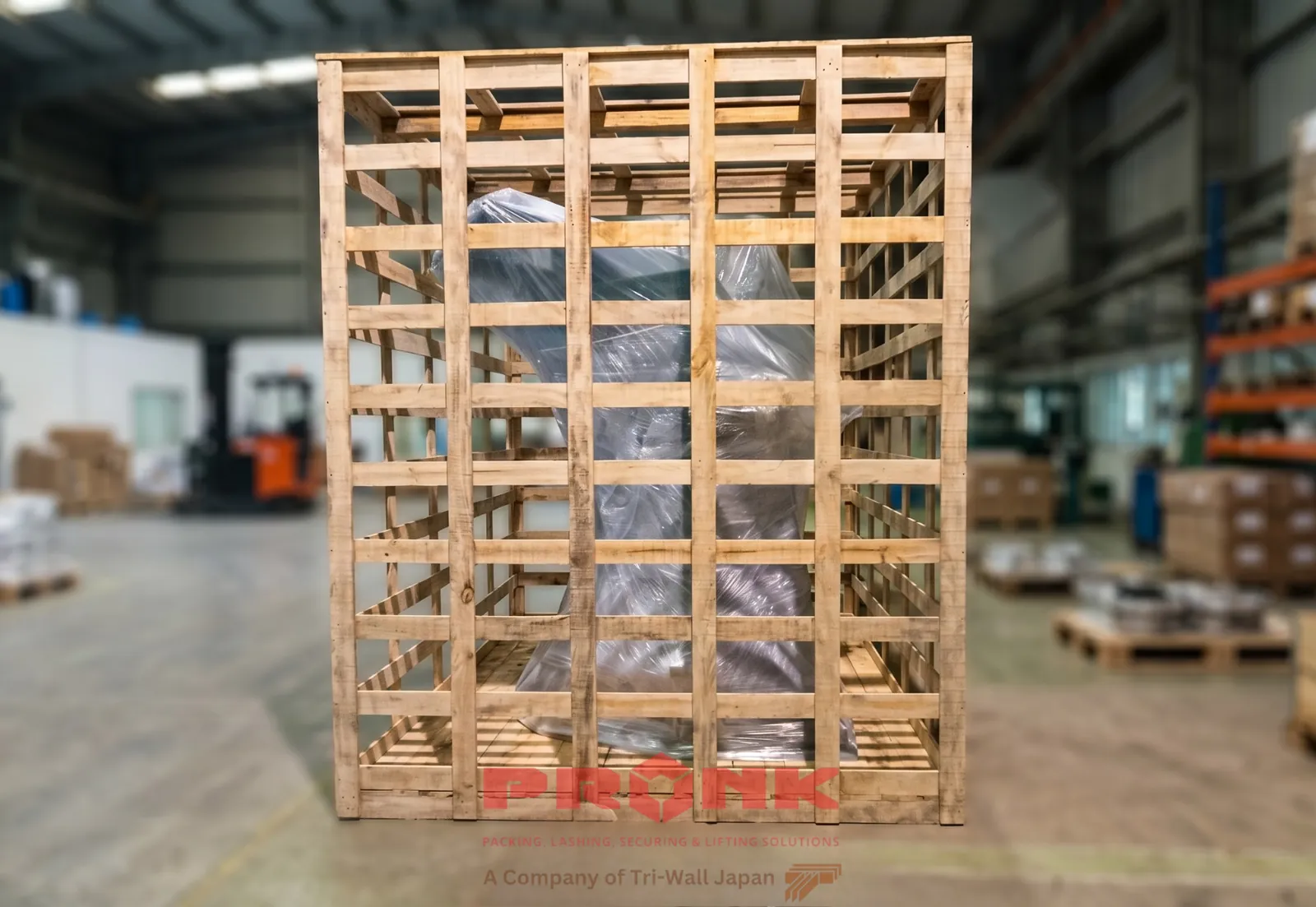
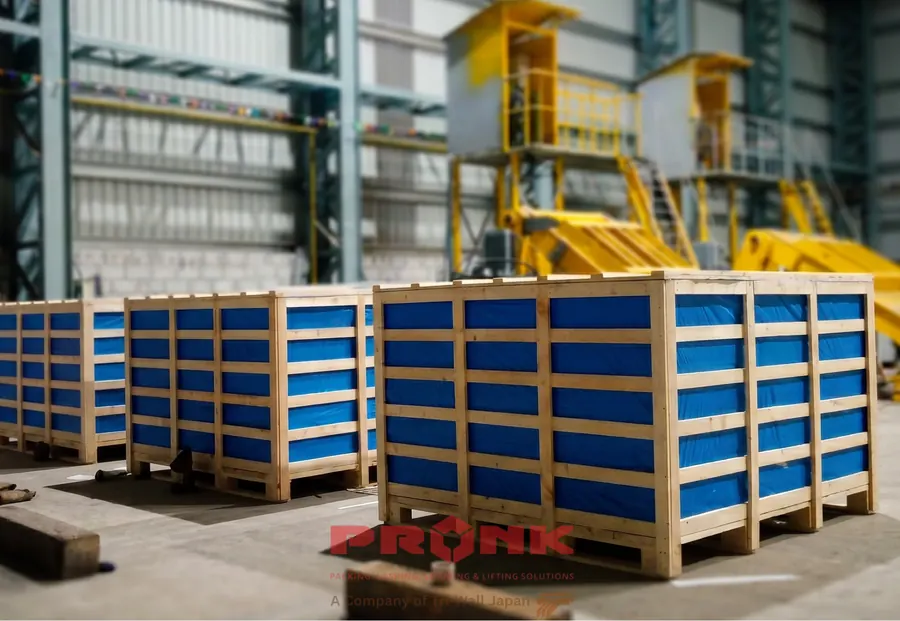
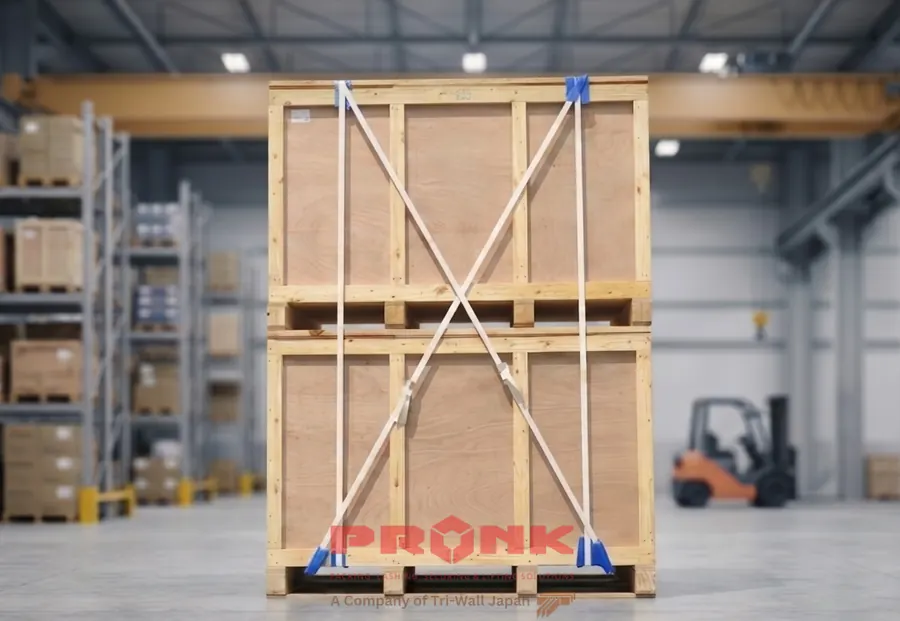
Step 7: Build the Crate
Fix walls and roof without puncturing the barrier. Reinforce the roof where stacking is possible, and use heat-treated, ISPM-15 marked timber for any solid wood.
Step 8: Mark and Document
Mark the centre of gravity, sling points, handling symbols (this way up, keep dry, fragile), case numbers, gross and net weights, and fit tilt and shock indicators. Prepare the packing list and photographs.
Step 9: Load and Lash
Lift the crate only at the marked sling points, position it in the container or on the flat rack to distribute weight, and secure it with certified lashing belts or chains and timber blocking to a cargo-securing plan.
Step 10: Inspect and Hand Over
Check lashing tension, photograph the stuffed container or loaded vehicle, record seal numbers and share the documentation with the consignee and forwarder.
Checklist
Machinery Export Packing Checklist
| Check | Why it matters |
|---|---|
| Weight and CG known and marked | Prevents tipping during crane lifts and forklift handling |
| Machine bolted to the skid, not just blocked | Stops sliding and bouncing on rough roads and in heavy seas |
| Barrier foil intact and desiccant sized | Prevents corrosion from container condensation |
| Solid wood heat-treated and ISPM-15 marked | Avoids rejection, fumigation or destruction at the destination port |
| Sling points and handling symbols on all sides | Ensures port and site crews lift and stack correctly |
| Lashing to a securing plan with rated gear | Keeps the crate in position under braking and vessel motion |
| Photos and packing list shared | Supports insurance claims and smooth customs clearance |
Common mistakes
Mistakes to Avoid When Packing Machinery for Export
- Using wet or untreated timber, which causes both ISPM-15 problems and corrosion inside the crate.
- Sealing barrier foil without enough desiccant, or puncturing it with nails during crating.
- Relying on blocking alone instead of bolting the machine through its foundation holes.
- Placing sling marks without knowing the real centre of gravity.
- Designing the crate for the road leg only and ignoring stacking and sea motion.
- Leaving lashing to the last minute without a plan or rated equipment.
Pronk India provides every step above as a service, from survey to container lashing. See machinery export packaging services or request a consultation.
FAQ
Frequently Asked Questions
How do you pack heavy machinery for shipping overseas?
Bolt the machine to a load-rated timber or steel skid, brace it against movement, seal it in VCI or vacuum barrier foil with desiccant, enclose it in an ISPM-15 compliant crate, mark the centre of gravity and sling points, and lash it in the container or on a flat rack.
What wood is used for machinery export crates?
Typically heat-treated pinewood or other softwood for the structure, marked to ISPM-15, with plywood for panels where a clean, exempt material is preferred.
How much desiccant do I need for machinery export?
It depends on the sealed volume, barrier material, voyage length and climate. Packaging engineers calculate it per shipment, which is why barrier foil and desiccant should be specified together.
Who can pack my machinery for export in India?
Pronk India, a company of Tri-Wall Japan, provides machinery export packaging and on-site packing from 7 locations in India, including Faridabad, Mumbai, Pune, Bhopal, Bangalore and Chennai.
READY TO SECURE YOUR NEXT SHIPMENT?
Request an Export Packaging Consultation
Share your cargo drawings, weight and destination. Pronk India's engineers will recommend the right packaging, lashing and handling plan.
Contact Pronk India